‘We have meth in Scotland?’: How drug services are failing LGBTQ+ people
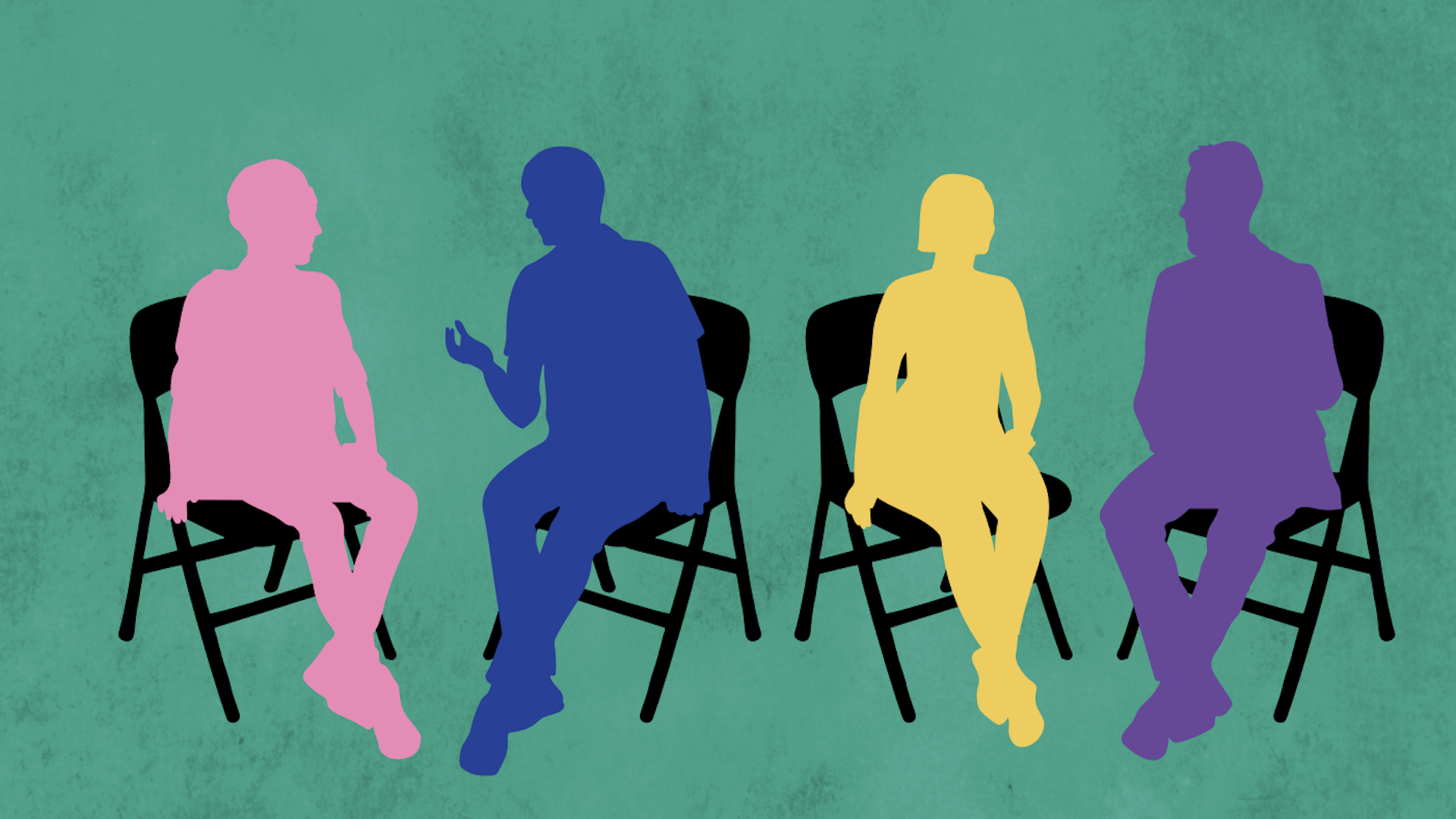
Image: Laura Hurst, Paper Arcade
It’s hard enough to talk openly about drugs. It’s hard enough to talk openly about sex, identity, shame, trauma or mental health. For LGBTQ+ people dealing with substance use issues, all of those conversations can pile on top of each other. People are often left feeling like they have to hide parts of themselves to get support.
The link between being LGBTQ+ and substance use is well known. Research in Scotland has shown that people in the community are more likely to have difficult relationships with drugs or alcohol, and more likely to struggle with their mental wellbeing. They’re more likely to be on low incomes too.
Ask why, and there’s no one answer. Discrimination and stigma makes people feel like they can’t be who they are, and they’re often treated poorly by the people around them. Some people use drugs or alcohol to cope with stress or feel more confident if they’re always having to defend themselves. A lot of the culture still centres around bars and clubs, and alcohol companies still sponsor Pride events.
Mohammed is 27 and in recovery. At first, it was booze – “in my late teens I started meeting men, usually off Grindr, and I was so anxious. I had to be drunk to do it,” he tells Buzz. “Even then a lot of the guys I’d meet would already be drunk or doing drugs, partying.”
That’s where the tie between substance use and sexuality started for him, he explains, but – like for a lot of people – it was just one piece of the puzzle as he tried to cope with past traumatic experiences. By the time he was 21 he was dependent on booze. “It didn’t matter if I was going to hang out with people, I just drank all the time,” Mohammed says.
Then he was introduced to crystal meth. A guy he linked up with offered it as an alternative if drinking wasn’t doing it for Mohammed anymore. He wasn’t sure what it was, and was already drunk, so took it. It became his go-to.
Want copies of Buzz for your organisation? Use the contact form on our home page or email hello@buzz.scot for details
“The chemsex scene is the reason I’m jobless and having to focus on getting sober,” Mohammed says. “But the same thing happened as with alcohol. I was dating someone, but I needed the substance more than the connection with him or anyone else. It doesn’t actually work, it takes away the very thing you’re trying to get from it.
“You’re by yourself, you’re using, and you’re either just creating new traumas or not processing the old ones.”
Mohammed decided he needed help after a couple of years, then found a lot of doors shut in his face when he asked for it.
“Professionals gave me nothing,” he says. “The first time I went to my doctor felt like a sitcom. He was basically like, ‘we have meth in Scotland?’ and asked if it was ‘like Breaking Bad’. I was sitting there desperate for help, I’d been awake for days, and this was an actual GP.”
He was referred to addiction services, but he was told they couldn’t do much other than put him on the waiting list for rehab because they didn’t have a treatment plan for crystal meth. Detox clinics wouldn’t take him. He often felt like the people he went to for help saw it as “entertaining”, because chatting to someone with a meth problem was new to them.
Services show a real lack of training and understanding of the specific drug trends within the LGBTQ+ community, says David Barbour, senior coordinator of communications at Alcohol Focus Scotland.
“Thinking particularly about crystal meth and GHB,” David says. “And that’s only when people feel comfortable accessing the help. A lot of services aren’t obviously inclusive.
“It’s not just the drug and alcohol services side. LGBTQ+ services tend to focus on either mental health or sexual health, but haven’t always looked at the relationship between those things and substance use. It’s not very joined up and people fall through the gaps.”
“I desperately wanted to be one of the lads so I could feel safe”
David spent his teenage years hoping he was just going through a phase. “I didn’t want to be gay, I didn’t want to be abnormal or weird or perverted. Because I knew that’s what people thought about gay people. I was frightened that I would lose my friends and family.”
For years he was “probably building a below-the-surface rage from the unfairness of everything”. Then, when he was around 18, “alcohol came along”.
He decided he was going to come out, but had to get blackout drunk to do it. With time he decided he was “fine”, but looking back knows he was still struggling with his identity.
“It was sort of like, what’s the map now for what I’m supposed to do in life if it’s not a wife and some kids? I was still so worried about fitting in too. I was really pleased when my friends would say, ‘you’re cool, you’re not like the mad screaming camp queens’. And I’d think good, that’s right, I’m one of you. It was so messed up, I just desperately wanted to be one of the lads so I could feel safe.”
He’d missed out on learning to manage sex and relationships like most people do in their teens. “I didn’t know how you were supposed to tell someone you liked them or ask people out. So I needed alcohol to make me semi-comfortable in my own skin. I ended up suffering from anxiety and depression, and my drinking got progressively worse until I eventually managed to stop.”
A rise in abuse towards the LGBTQ+ community – especially trans people – in recent years is making it harder for people to ask for help. “I get so angry because I know the impact that had on me,” David says. “Knowing everyone else thought my identity was perverted or weird.”
Trans people are feeling more and more worried that staff at services won’t be welcoming to them, says Whitney Welsh, wellbeing support worker for the LGBTQ+ service at Glasgow’s Murray’s Initiative.
“There’s concern about how people will treat them or think about them,” she says. “Not knowing if it’s safe to open up about your identity or if other people will marginalise you in group-based services.
“And things like – is there a policy that’s inclusive of trans people using the toilet, or are there single-style washrooms? Quite literal barriers to getting in the building for support.”
“It’s cathartic not having to explain everything about what you’ve been through”
It takes a lot to get to the point of asking for help, Whitney says, so when you also need to figure out if a service might be hostile towards you, a lot of people are lost.
“I have had some people tell me that they’ve had bigoted statements directed at them from other service users,” she adds. Whitney’s heard that some organisations have had to advertise LGBTQ+ drug support programmes less in recent years because they started attracting “negative attention from people against trans inclusion”.
But the support is there for people who need it, when they’re ready for it. Whitney runs a substances peer support group for LGBTQ+ people. Some people who go along say they’ve used other services but haven’t felt comfortable talking about gender or sexuality, and that’s what they need. Others say they can get support in loads of other places, but it’s the only place they can meet other people in their community.
“There’s a lot of value in meeting others who’ve had similar experiences,” she says. “It’s cathartic not having to explain everything about what you’ve been through, and have people just understand.”
For Mohammed, now more than three years into his recovery, it was recovery cafes then support groups just like Whitney’s that helped him start to rebuild. Arts-based support groups too.
“I can talk about all this, getting into drugs through gay culture, and it doesn’t faze anyone,” he says. “Recovery is all about connection and I’ve been getting that. I learned I can meet gay people outside of drug scenes. It’s just been good.”
Need support?
Call 0800 464 7000 or email helpline@lgbthealth.org.uk
Call 0141 353 1800 or email lgbtqi@murrays.scot
Galop, for LGBTQ+ domestic abuse support
Call 0800 999 5428, email help@galop.org.uk or get in touch via webchat